Thursday, April 19, 2012

African Birthdays

If anyone knows me well, they know that I love birthdays and celebrating them with friends and family.  I love to spoil friends with gifts and cards.  As an RA senior year, I made sure each of my residents got a birthday sign and made sure each of them got a special treat like cupcakes or brownies.  I always enjoy making other people feel special on their birthdays and feel so blessed when people do it for me on mine.  This year, my roommates and I were at a music festival for the weekend and had a great time camping and listening to some great music.  On my birthday, my roommates treated me to Titanic 3D which was amazing and a perfect birthday present!  They also made me a delicious dinner and cake and a great card to remember it all.  My birthday ended with a Skype call with my parents who missed having me home to celebrate but held up a pint of Cherry Garcia with two candles so they could see me make a wish.  It was all very thoughtful and I appreciated everything that went into making my birthday in Africa so special.  I even had the day off from work for South African Family Day which was a nice break. 

The following day at St. Theresa’s Lyle turned 13 and I was there to celebrate with him and the rest of the boys from Cottage 3.  I took down all their birthdays at the beginning of the year to make sure I remembered them all and were able to do something special for each of them.  Lyle was the first one I was here for so I brought the cottage mini cupcakes and candles so we could sing.  I lit the candles in the cupcake he picked and we all sang happy birthday to him.  It was a great moment to see all the kids singing and having the spotlight on Lyle for a couple of minutes.  From the looks of the excitement on the boys’ faces, I don’t think the Uncles and Aunties do anything special for the boys birthdays so I was happy to make Lyle for special.  Lyle is usually pretty quiet but when he does talk, he always has plenty of questions about what life is like in America.  He asked me how I usually celebrated my birthday and I told him that I always blow out a birthday candle and make a wish.  It was very nice to share this little piece of home with him and the rest of the cottage.  After Lyle blew out his candles, Auntie remembered that it was my birthday the day before so we relit the candles and everyone sang to me.  Of course the rest of the afternoon was blown from all the sugar the boys had but the lack of homework was worth the smiles on Lyle and the rest of the boys faces.

On Wednesday, we went to our biweekly dinner at Kloof Parish with the priests.  Gogo Flossy cooked a delicious pasta dinner and the conversation was great as always.  Then Father Frank said that there was a very special dessert for everyone.  He then came out with a birthday cake and everyone sang happy birthday to me and my roommate Kevin, whose birthday was 2 weeks before mine.  I had no idea this was coming and was flattered that they took time to get a birthday cake for us.  The extra special part of the whole meal was that Gogo Flossy actually sat down and had a piece of birthday cake with us.  Gogo is the cook for the priests and never sits down to eat her own meal.  Father Frank invited her to join us for dessert and she hesitantly accepted.  She sat next to me and quietly enjoyed her piece of cake while the rest of us continued our conversation.  It was great for Gogo to be a part of my birthday celebration along with all the priests and Brother Craig at Kloof Parish. 

Turning 24 has been quite the whirlwind of feelings and emotions but I feel so blessed to be a part of this community and program in South Africa.  My birthday was perfect because of Kellie, Kevin, and Matt and I thank them from the bottom of my heart for all the love they have showed me.  Birthdays are special no matter where you are in the world.  I am so blessed to be able to say that I shared my birthday with these amazing people in my life.  I hope you all special you are and enjoy your birthday whenever it is! Just a little shout out to my brother Steven whose 21st birthday is ironically today, the day I am posting this blog about birthdays.  I hope you have a great birthday Steven and all your wishes come true.  I love and miss you all but know that I will be thinking of you on your birthday even though I can’t be physically with you to celebrate. 

Halala ngosuku lokuzalwa (Happy Birthday in Zulu) to everyone!

South African Fact: Dessert is called pudding in South Africa.  Also when we were teaching body parts at St. Leo, I found out that our American “head, shoulders, knees and toes” song is actually “head, shoulders, chest, waist, knees and toes” in South Africa/Zulu.

Thursday, April 5, 2012

Pictures from Pomeroy

Classroom at Gordon High School which was the first school we went to

Soccer playing at Mozane

Girl dancing at Nkamba, the poorest place we went to

Younger kids drawing at Matshematshe

Playing soccer at Matshematshe

A view near Pomeroy

A view near Pomeroy

A view at Msinga Top which is 15km away from Pomeroy

Another view from Msinga Top

Monday, April 2, 2012

Pomeroy: the beauty of simplicity

When Americans think of Africa, they usually picture animals, huts, and black children running around. This deception is more or less what we found in Pomeroy, the "African bush," in addition to so much more.  The drive to Pomeroy from our house in Botha's Hill takes about 2.5-3 hours and consists of very windy, hilly roads, driving through small villages, and breathtaking sites of mountains, fields, and greenery.  There is one part of the drive in which you go down a small mountain on a windy road with no guardrails on the side! That was quite nerve-wracking for me to drive on but an adventure nonetheless.  This road winds all the way down to a valley which leads you on a road to Pomeroy after you pass through a small village called Tugela Ferry.  The greenery turns brown and gets drier as you get closer to Pomeroy but it is still beautiful and has plenty of green fields and trees.  The village of Pomeroy itself consists of an approxiametley two mile piece of straight road that goes straight through the town.  There is an Augustinian convent where we stayed at, a post office, a small prison, and a small section of stores on either side of the street that is considered  "downtown."  They do have a Shoprite but most of their stores are run by the locals such as the fruits and vegetables, the butchery, and the liquor store.  As soon as I drove into Pomeroy, I was struck by the simplicity and the small scale village that was busy and populous for a Thursday morning.  I instantly thought "how do these people live here with so little?" It wasn't until the end of the week that I realized the true meaning and beauty in the simplicity of this small, amazing village of Pomeroy.


The Augustinian convent we stayed at is the first thing you come to as you drive into Pomeroy.  There are five sisters that live here year round and run a clinic called Noyi Bazi which they share a property with and provides services for all the surrounding areas.  We thought we were there that week to help out Sister Delores in the clinic because her other sisters were going on a retreat by our house in Botha's Hill but we didn't end up working in the clinic too much.  Sister Madeline, who is a pint sized nun who has lived and worked in Pomery since 1965, gave us a tour of the property when we arrived on Thursday.  The clinic has tablets (medicine) for HIV, TB, and many other things and is always stocked with the right ones so Noyi Bazi is very busy all the time.  At the end of the day when our other work was done, I would go to the clinic and help organize/sort all of the patient cards they used that day and note how much each patient paid.  It was a very easy job but it helped make the end of the day process go quicker so I was happy to help.  On Friday when I was in the clinic, three boys who were 14, 15, and 15 years old came in and registered but then were sent home to get permission/consent to have a circumsion done the following day.  I didn't get the whole story about this but I know that the boys wait until they are old enough to get a circumision and I think it has to do with them becoming a man and having more responsibility.  One of the nurses also mentioned to me that there were going to be a lot of pregnant women in the winter because they need to keep warm and they are bored. The nurse said that these are the excuses they would use when they got pregnant! I was kind of disappointed that I wasn't able to work in the clinic as much as we were told we were going to do but the other things we did were good and were helpful.


Throughout the week we helped Sane and Nosipho with different groups of kids who are part of the Orphaned and Vulnerable Children (OVC) program.  All of the kids were out of school last week so we spent each day at a different school in a different area.  This was a great experience to be able to go to different communities outside of Pomeroy and really see/feel how these kids live in the "bush."  Each day was a completely different setting/area with some schools having actual classrooms and chairs while others just had  an empty room with half broken benches.  The first school we went to on Saturday had 45 kids crammed into one room sitting in chairs around the perimeter with us sitting in the front.  Each time we met a new group of kids, they started by singing some Zulu songs which were beautiful even though I couldn't understand what they were saying.  They also sang the South African national anthem which I enjoyed.  Then we would all pray the Our Father before introducing ourselves.  The kids would introduce themselves in English if they could and we butchered our way through a couple phrases of Zulu to introduce ourselves.  We said "Hi my name is ______. I live in America. I am ____ years old. I teach at St. Leo Primary School" which in Zulu is "Sanibonani Igama lami Janine.  Ngivale e America.  Ngemenyaga e u 23.  Ngifundisa e St. Leo Primary isikhole."  These were pretty simple phrases to say so I struggled with them in the beginning but by the end of the week I was much better but no where near perfect!


After introductions, we talked to the kids about some pretty tough subjects like jobs, HIV/AIDS, TB, education, and child abuse.  Each time we said something, some of the kids would understand but most wouldn't so our words were translated by Nosipho or Sane into Zulu.  Usually we would start by asking the kids what they wanted to be when they grew up.  Some of the responses were doctor, nurse, teacher, policeman, dentist, solider, security guard, social worker, pilot and engineer.  Some groups were more creative than others but this was a good question to ask to get the conversation started about the importance of staying in school and getting a good education in order to grow up and do all of these great jobs.  We also told them that it is important to stay healthy which transitioned into the talk about HIV/AIDS and TB.  It felt a little weird at first talking to a bunch of African kids about these diseases but sadly they know about them even at the youngest age possible because they effect so many people in the country.  Another strange thing about it was that we were just saying things that got directly translated into Zulu so why would we need to say it? Sane and Nosipho told us that it was good for the kids to hear this information from young white people to show that we care and know the information that is effecting their lives but also some of ours.  Kellie and Kevin were really good about talking about HIV/AIDS and TB because of their work in the AIDS clinic but by the end of the week we were all able to contribute to that part of the talk.  We told them to cough in their arms or hands and not to cough out in the air because that spread germs.  We talked about the symptoms of TB and HIV and how they can go to Noyi Bazi clinic to get tablets to make them feel better if they are sick from these diseases or any others.  It was important for us to talk about the ways you can get HIV like through blood to blood contact or unprotected sex which some of the kids already knew but others didn't seem to.  Some of these children go to traditional healers who cut their arms from razors so we told them to make sure that they have their own razor when they go get their cuts.  We stressed the importance of wearing condoms, gloves, and most importantly abstinence.  It was quite interesting and shocking to talk to children as young as 5 about abstinence but HIV spreads so quickly that we want to try and prevent these kids from engaging in sex early and therefore decrease their chances of getting HIV.  We also told them that it is important for them to get and know their status which they can find out for free at Noyi Bazi clinic with just a prick of their finger.  After these topics we asked them if they knew what child abuse was.  Some responded with the correct answer while others didn't know.  It was easy for me to tell them about child abuse and how it is not ok for someone to hurt them like that because of all the studying I did with it in school.  Although the whole time I couldn't help thinking that most of the kids in the room were very young to talk about these things.  I felt like all of them have to grow up way too fast because of the society that they live in but in the end it is better for them to be educated and aware of these things at a younger age so they can ask for help if they need it.  This discussion also allowed the children to talk about their rights like the right to education, health care, a home, play, eat food, and the right to complain which we used to discuss how they should say something if they are getting hurt by anyone or they are not getting something that they are supposed to like education, health care or food. 


After these discussions we gave the kids a chance to ask us things about America and the differences between here and there. Most kids asked about the travelling to get here like the distance and time.  There were a lot of questions about the animals, the money, and food that we ate.  Most of them knew popular artists like Rihanna, Beyonce, Nicki Minaj, Kanye West and Justin Bieber.  One of the boys asked really interesting questions about the time difference and the if we were happy that we were in South Africa. A couple of the older kids asked questions about HIV and TB which made us happy that they were concerned about what we were talking about and allowed us to clear up the stigmas people have against people who are HIV positive or have AIDS.  After our talks, we took the kids outside and played soccer/pass with them until it was time for lunch.  We fed them hot dogs, an apple, and juice which they all seemed to enjoy.  Some days the butcher in town didn't have hot dogs so we had to given them pologna which is basically a pink hot dog which looked gross but the kids ate them.  


As I mentioned before, all of the places we went were completely different and unique in their own way but I want to briefly talk about two of the places we went that were quite extreme in their differences.  The first was the place we went to on Tuesday called Nkamba which was by far the poorest of them all.  There were a couple of mud huts that people lived in around us and the building we were in was long and narrow and made of cement with a roof made of sticks.  It was extremely hot that day but a little cooler inside.  The kids sat on broken benches and all crammed together to fit.  It was definitely a wake up call for us because we were complaining about the lack of things to do in the morning but this school definitely made me appreciate being there with the kids.  This group was by far the best singing group and performed songs about TB in addition to a little play about the birth of Jesus.  The first place we went on Saturday, Gordon High School, was probably the most well off out of all the sites because it had many different classrooms and a chalk board that we were able to use.  The kids were very attentive and asked a lot of questions which we enjoyed.  Matshematshe, which means many stones, had the smartest/most clever (the South African's use this a lot to describe bright kids) kids.  Almost all of them were able to introduce themselves in clear English and understood what we said when we were talking.  There were 2 older kids who could translate everything we were saying back to Zulu.  The oldest girl was also able to explain what HIV was and how you get the disease.  It was inspiring to hear them explain it and know what they were saying.  The week was quite the experience overall but I am so blessed to be able to have gone there and met all those amazing kids and people.  


Looking back on this week at Pomeroy, I really enjoyed the experience and all the people we met.  It was hard at times to see why were there/if we were helping in any way but in the end I realized how much we were appreciated and what a treat it was for us to come to their small village to meet them and live with them for a week.  We had a lot of free time which was discouraging at times but I enjoyed having the time to read and reflect.  Pomeroy is a very special village which is absolutely beautiful in every way possible.  The surrounding communities are full of vibrant children who are living in a society that might be difficult at times but their aspirations and dreams will help them to stay in school and succeed.  Nosipho told me that one of the most clever boys from Matshematshe will most likely be able to go to University which is a huge accomplishment for someone from the Pomeroy area.  This past week will always hold a special place in my heart and allowed me to see the beauty in the simplicity of things such as a smile, a song, a word, a mountain, and a gesture.  I hope and pray that I will continue to experience the beauty in the simplicity of many other things throughout my time here in South Africa.  I encourage you all to take time out of our day to embrace the beauty of simple things and feel the grace of God in everything that you do.


South African Zulu Phrases: when you leave someone you say Sale Khale which means "stay well" and you can also say Ngiyajabula ukuwazi or Ngiyajabula ukunazi which means "I am happy to meet you or you all."  So to all of you I say Sale Khale until my next post which will be pictures from Pomeroy!

Tuesday, March 13, 2012

Grade 7 at St. Leo

You know times have changed when you meet learners in grade 7 who are more concerned with their families and being anywhere else besides school.  I'm sure some of us had our bad days at this age both socially and educationally but the grade 7 learners at St. Leo are quite unique.  When I first found out that I was going to be teaching English, I was nervous that I wouldn't know English well enough myself to be able to teach it to others which is partially true but we have also found the opposite.  The extreme differences between the highest and the lowest levels of learners throughout the school is incrediable but the most previlent extreme is within the grade 7 learners.  The smartest learner in the school is Ntuthoko who always stumps Matt and I with "exception" questions to the English language.  We have a group of 9 advanced learners who we are working extra hard with but I will go into details later on about them.  There are some "B" or average learners who can speak well but their writing is rough and then there is everyone else.  I hate to clump these learners into "the rest" but their skill level is significantly below all the others and could probably be compared to some of our grade 4 learners. 

There are 5 classes in grade 7 including 4 groups of "regular" learners and one advanced group.  For the four groups, we have dug ourselves a big hole when we tried to shove noun, verb, adjective down their throats and in their brains for weeks now and they still aren't getting it.  This made both Matt and I as well as the learners very frustrated with Fridays at St. Leo.  The abnormal scheduling of St. Leo has caused us to not have grade 7 every week and if we missed a group, we have played hangman and had dance parties with some of them which is of course fun but can't happen every week.  After a couple weeks of frustration, Matt and I talked about what our goals for grade 7 were and decided that we would try to teach more practical English that will be useful for the learners who will probably not succeed in high school.  Some of these subjects will include themes of health, occupations, around the kitchen and others that will help build their vocabulary and English.  These average learners who do not succeed in high school will most likely get jobs that will be part of some of these themes and hopefully they can use the words we teach them to speak to their employeers or other people they come in contact with.  In the States, it's expected that you continue on to high school and although some people don't end up graduating from high school, it is not really an opinion not to try.  In South Africa, it is not necessarily an option either but it can be for some people/Zulu families.  All schooling, including high school, has a price and some can be quite expensive.  The public valley school is where most of the grade 7 learners will be going if they pay their school fees and make the effort to learn.  Unfortunately, we have heard that this "blue school" (they have blue uniforms and is near St. Leo) is very similar to St. Leo in that the structure is disorganized and there is not much learning going on during the day.  The other schools in the area are much better but are harder to get into and cost more money.  As I mentioned in an earlier post, there is a scholarship program for two learners to go to Hillcrest High School which is one of the best in the area and a good number of them will go to Wybank which another good high school.  The goal is for all of the advanced kids to go to either of these schools as well as maybe some of the average learners. 

Matt and I teach the advanced group for an hour every Friday which is their normal English class.  In this class we have been teaching them noun, verb, adjective, adverb, contractions, pronouns, subject/object, a/an, this that these those, and subject verb agreement.  They know most of this stuff very well in addition to parts of the body both internal and external.  We are testing them on Friday so hopefully they all do well! In addition to this Friday class, Matt and Kevin have an extra hour on both Tuesday and Thursday afternoons where they have been taking the advanced group during that time for extra tutoring.  They will be teaching them maths (no that is not a spelling mistake mom!), a review of English, and some reading comprehension.  We have asked the local parish we attend to donate the first Harry Potter book so they advanced group can read that together and have practice with reading comprehension.  We will also be giving them homework that they are expected to do and hand in each week.  Our expectations for this class are very high and we hope that all of our effort and extra help will help them to succeed in high school and get good marks.  This group is one of my favorites because they are excited to learn and ask tons of questions.  They are also very social and have great personalities.  Londeka is quite the diva and always struts her way into class but does it with a smile! Last week, Kevin told her to challenge me to a dance contest so at the end of their class, some of the kids drummed a beat on the tables and we had a little dance contest.  It was quite entertaining and I'm sure everyone thought it was amuzing to see me dance!  I have so much faith in this group but I'm sure they will have plenty of struggles both this year and in high school.  In addition to the educational help, we are going to try and talk to them about the socialization of high school and what to expect.  Unfortunatley, Matt and I have never been the minority in a school like they will be but hopefully we can talk through some of their concerns and give them a positive outlook on what their experience will be in a South African high school.  Its going to be a long road for these grade 7s but Matt, Kevin, and I are excited to see how the program expands throughout the year and how the learners group both individually and as a group.  I will keep you posted with more information about these special learners as the year goes on!

South Africa Fact: On Wednesday, their was a national strike in South Africa but the reasons for the strike were quite different according to different people.  One person said it was for roads that need to be fixed and another person said it was for the teachers who want more money.  It's quite ironic because most of the teachers at St. Leo left for the day to go to the strike but the education they give and the work they do is a pretty low amount compared to teachers in the States and within South Africa as well.

Friday, March 2, 2012

Cultural differences: Zulu vs. American

Have you ever thought someone said something but they really said something completely different? I feel like this happens all the time in English but now it is happening in a completely foreign language which makes things so much more difficult to understand and react to. The country of South Africa is full of diversity and cultures.  The people we interact with most are the Zulu people who live mostly in the Valley and speak fluent Zulu which yes has some clicks but not as many as other tribal languages you may be thinking of.  From the Zulu learners and teachers at St. Leo to the Zulu toddlers and women at 1000 Hills, I am learning more and more about the Zulu culture, their language and their lifestyle.  


At St. Leo, I have learned that structure in the school and classroom is not necessarily a top priority and homework is rarely given.  The lack of schedule and clocks around the school make it very hard to run a classroom but again, timing may not be a priority to the Zulu people for one reason or another.  I have learned that prayer and singing are important parts of the Zulu faith life both at St. Leo as well as 1000 Hills.  Throughout the weeks I have been awfully frustrated with the learners who do not understand what an adjective is only to take a step back and remember how hard it was for me to learn French when I was their age.  Everywhere I go I have seen the affects of HIV/AIDS on the Zulu people.  The physical size of the learners bodies have many extremes within the grades as well as their learning abilities.  We do not know the exact number of learners that are affected but we can make assumptions about some of them by their small figure or other physical deformities.  Most of the learners understand the importance of an education but as in most lower income school settings, how are you supposed to focus on the class or teacher when you stomach is growling because you haven't eaten in two days? How are you supposed to pay attention when you are worried about your family back at home? Thankfully the teachers, and school itself, are very supportive of the learners needs both emotionally and physically by giving out food parcels to bring home to their families and throughout the day.


At 1000 Hills, I have learned about Zulu weddings, traditions, and about the stigmas against the Zulu culture itself.  It is expected that the Zulu woman marry at a fairly young age (I am not sure of the exact age but one woman told me early 20s).  There is a dowry that must be paid to the brides family from the future husband.  This can be anything from a cow or goat to food or cloth that is made by Zulus.  Mpumah is a 21 year old Zulu woman who has a two year old son that is in my class.  She is currently studying Education at the University but helps out in our toddler room in order to get more experience.  Puma, for short, was telling me about these wedding traditions and mentioned that Fikle (the head teacher) told her that she must get married even if it isn't to the father of her child.  Puma said that she didn't ever want to get married and Fikile was completely shocked by this statement saying that it is Zulu tradition to get married and have a big ceremony.  One of the problems for Puma is the cost of the wedding itself.  There are many ceremonies and lots of costs that go into the wedding before the actual marriage of the two people.  When she asked me about American wedding traditions, I told her that they cost a lot as well but there is usually only one official ceremony that costs the most money, as opposed to many different ceremonies like in the Zulu culture. The customs of the Zulu people also include the wearing of the strings around the child's waist, as mentioned in a prior post, and traditional dancing which I hope to learn part of while I am here.  


The one challenge I have had with the Zulu people and their culture is their defensiveness of their actions and their opinions about educating their youth.  As mentioned in another prior post, the Zulu women believe that you should not interact with any child until they are of school age and their baby teeth have fallen out.  This statement has still baffled me to this day but that may be a cultural difference I may never understand.  It is common knowledge for me, and I'm sure many of you, that between the ages of 0 to 5 years old, children's brains are like sponges and they are able to learn and develop so much during that time period.  It is a crucial part in a child's life to learn how to speak, interact, and explore at that young age.  Luckily the 1000 Hills Community Center has a great person, Julie, who has come to teach and help the teachers understand why this age range is so important for the child's development and future.  Julie has spent the last year working with the teachers of the 3 to 6 year olds.  She has been teaching and showing them different things they can do throughout the day as well as setting up a schedule that include a fine motor, gross motor, and physical activity every day.  This task of showing the teachers what is needed for these children to develop properly has been quite difficult for many reasons but one of the main reasons was the cultural differences she experienced.  Not only did they not know anything about the tools needed for a child's development but the teachers also had a hard time accepting Julie as a teacher.  She is a white South African and not Zulu which in turn caused the Zulu teachers to become defensive against what she was trying to say and teach.  The Zulu women thought that Julie was trying to overtake their roles as teachers as well as cross cultural barriers about the development of their children.  It took Julie about 4 months to be accepted as a superior but also as a person from the Zulu teachers.  Currently, all of the teachers have a set schedule and list of activities to do with the children each day.  Julie is very pleased with this accomplishment and hopes that my toddler room with be the next one to take that leap in the developmental process.


My experience with the Zulu teachers in the toddler room have been both good and difficult at times.  The teachers all enjoy having an extra set of hands to help out with the toddlers but sometimes my role as a volunteer can be confusing to them.  Up until about a week ago, there was no one in the classroom with me that spoke enough English to hold a conversation or get a point across.  Luckily, Puma is there now and she is able to translate needed questions or comments between the Zulu teachers and myself.  The problem becomes when there is a difference in opinions between us in terms of what to do with the children each day.  Sometimes the women are extremely efficient with the changing of the nappies (diapers), at breakfast and lunch, as well as nap time; while at other times they are slow and a little bit lazy.  I have tried to do my best by stepping in during meal times and nap time but when it comes to activity time, the teachers often make excuses or are very unmotivated to do what I suggest.  Part of this can be a misunderstanding and language or culture but sometimes it is also laziness.  The challenge becomes what my role is as a volunteer but also as co teacher in the classroom.  When I was first introduced to the classroom by Julie, I was asked to help show the teachers how to interact with the kids with puzzles, drawings, and other activities.  I have made groups of toddlers according to age as a way of organizing them and have the idea to have each teacher take one group at a table with a specific puzzle or activity.  I have the approval from both Julie and Dawn, the director of the whole center, to do these things but recently the organization of this idea hasn't been present.  Luckily, Puma and I are on the same page with this and hope to get this system up and running soon.  The problem becomes the culture difference of a white girl from America coming into the classroom and telling the teachers what to do with their Zulu children.  When I talked to Julie about this concern, she told me that because I am "hands on" with the kids and not sitting back barking out orders, I should be able to have a system that is efficient and effective.  On Thursday, we were able to break up into these groups/tables and have each kids color a picture of a cloud, moon, and sun.  It was a great idea but because of the language barrier, I was not able to tell the kids to color inside the lines so mine all turned out to have scribbles all over them but that is a typical toddler picture! The Zulu teachers on the other hand were able to talk to the kids and guide them to color the correct thing.  In my opinion, it doesn't matter what their picture looks like as long as they are doing something throughout the day, they will be having fun and not crying or trying to hit another kid with a toy. O the joys of working with toddlers! 


I'm sure as the year goes on and I get to know more about the Zulu culture, there will be plenty of more differences and clashes but I am ready to embrace everything these people have to offer.  So until I experience another lost in translation cultural difference, I leave you with a poem I wrote during Kellie's prayer about prejudice and the stigmas people have against people we have met here so far.


My name is not lazy Zulu woman.  I am cultured, spiritual, and proud of who I am
My name is not Mama or Auntie to just my son.  I am a mama and Auntie to all the Zulu children, and especially to the three other children I take care of.
My name is not uneducated and dumb.  I am currently studying tat the University for a degree in education while supporting my child and family
My name is not AIDS stricken person.  I am blessed to not be HIV positive but many of my relatives and close friends are.
My name is not unsupported and helpless.  I may have made some mistakes in the past but I am a daughter who is loved by a mother and father.  My father may have two families to support, mine and his new wife's, but I am still loved.
My name is not lazy Zulu woman.  I am gifted, spiritual, faithful, happy and most importantly, proud of who I am.


South African Fact: This weekend we are going to a concert at a restaurant called the Rainbow Cafe that has been open since the beginning of apartheid and was the only restaurant in South Africa to always accept black and white people throughout the whole time it has been in business.

Thursday, February 23, 2012

The post you all have been waiting for

The view of the Land of 1000 Hills from our house

Akhona, aka Shrek Baby, hanging out with the older kids

Lindo yelling at Akhona for almost knocking over his tower

The two shyest boys in the class

Akhona playing on the swing

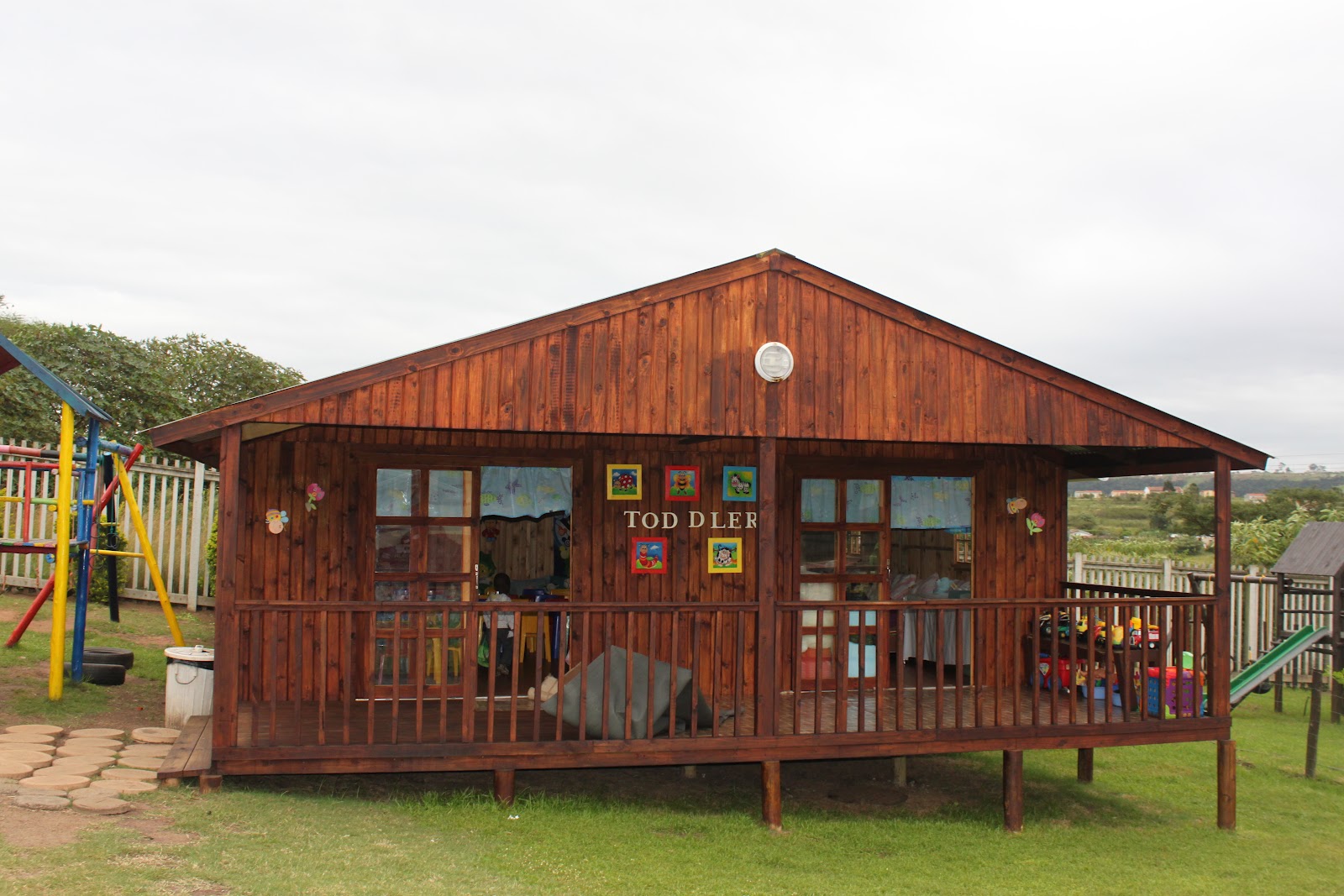
Toddler 2 room at 1000 Hills Community Helpers

Lindo the little ham of the group

Twins Anele and Kwanele

Okuhle on the tire screen

Kids eating breakfast, it was cold that day so they left their jackets on

Akhona aka Shrek Baby climbing 

Anele on the slide


More pictures to come :)


Monday, February 20, 2012

Janine as a Teacher

Mondays, Wednesdays, and Fridays, Matt and I travel to a part of the Valley called Molweni, a rural township, to a Zulu school called St. Leo Primary School.  The school has about 800 learners (South African word for students) from grade R to grade 7 who speak Zulu as their native language.  We are teaching oral English to grades 3 to 7 and I personally teach grade 6 on Mondays, grade 4 on Wednesdays, and the lovely grade 7 on Fridays.  Kevin and Matt teach grade 5 on Tuesdays and the adorable grade 3 on Thursdays, which includes quite the stories when they come home.  The school itself is separated into 5-6 different buildings that each house two or three classrooms, a small library where we teach, and an administrative building where the principal and assistant principal have a small office.  
Every morning there is an assembly where all the learners line up in rows according to grade and gender in front of one of the buildings.  The assistant principal, Themba, or one of the other teachers leads the group in some songs and morning prayer followed by announcements.  Matt and I always try to get there in time to see this assembly because it is a great way to start our day of teaching and be present for the learners to show that we care and are committed.  After the assembly, we fight through the sea of students to get to the library/our classroom.  The library building is shared between our classroom and two grade R classrooms, one on either side.  The class that we share a door with has a really good teacher and the learners are always well behaved and doing something with the teacher, Thule.  The other grade R teacher on the other side is very lazy, extremely obese, and doesn't do anything with her students.  Those learners are always screaming, running around the classroom, and not doing any work.  Most of the time the teacher doesn't even show up to school/leaves early.  There have been multiple times that either Matt or I have had to go yell at the learners for being too loud when we are trying to teach our class.  There is a teachers union at St. Leo that causes teachers like this lazy grade R one to still be able to stay at the school and get paid because no one wants to rat her out for doing such a poor job.  Its quite the messed up system that neither Matt or I understand but someday we might have to say something if the ridiculousness continues.  Unfortunately, this is not the only crazy thing about St. Leo.  Have you ever wondered why things are the way they are? Well at St. Leo's there is no logical answer for anything.  Last week one of the grade 2 teachers, who we never met, passed away from cancer which is very sad but the whole school was messed up because of it.  Each day the kids have a 30 minute break from 10-1030am and last Monday the teachers had a meeting during that time to plan the memorial for the teacher but instead of it taking 30 minutes, it took 2 hours and all the kids were running around the school grounds with no supervision.  Of course we didn't know what was going on until we tried to round up our next class and couldn't find any teachers let alone the learners we needed.  Needless to say, the rest of the week was a disaster with the three hour long memorial service during the school hours on Wednesday and just random "early releases" for the other days.  Since the teachers have an union, they are allowed to do what they want but last week they closed school early way too many days when they could of had the services or meetings after school hours so the kids could actually learn that day.  Sad thing is on a normal week, the learners run wild for a good portion of the day or if they are in their classrooms, who knows  what they are actually doing/if they are learning anything.  The school has no set schedule/times and the days that each grade has our English class, the rest of the day is considered to be a "free" day for the learners and students.  Now I will say there are some good teachers in the school that try and teach the kids and are dedicated but most use our English days as a time for the kids to run around.  For example, on Wednesdays when we have grade 4, there are two different classes (4M and 4F) that are split into 4 classes each.  So we usually have 4M group A, B, C, D and then 4F group A, B, C, D which works out well for us because its orgranized but when we have 4M group A, the rest of the kids are running around/maybe in their classrooms just talking and not doing any work.  It is very hard to find the kids for the next class/have them come in at the right time but Matt and I are going to try to give each teacher a schedule of names and times we want the learners to come to English class which hopefully will work.  

Ok enough with the complaining. Each grade has some kids that are great and sort of at the level they need to be at but most of them are way below.  I always have to remind myself that English is their second language and remember how hard it was for me to learn French when I was in junior high.  Another thing about the school that is frustrating is that the school doesn't start teaching both oral and written English until grade 3.  So the grade 4 we have on Wednesday have only had one year of English before they came to us.  Luckily the kids that are more "advanced" most likely have a parent or relative that speaks English at home which has helped them excel.  The other kids who don't have someone like that are starting from scratch.  For grade 4 we have taught/reviewed the alphabet, colors, food, shapes, and basic pictures.  We have used the An African ABC book multiple times and tried to get them to pronounce the words correctly like A is for ant, A is for apple, B is for banana, C is for cat, etc.  Most of the book is useful but some words are ridiculous like V is veranda and Q is for queue which I barely know what it is, how the heck are they supposed to know?? 

Grade 6 on Mondays is much better but we tried to give them a test this week and last week which all but about 20 bombed completely.  This was partially our fault because we threw together a test that had contradicting directions that were confusing.  In the first part they were supposed to underline the noun, circle the verb, and put a star over the adjective but then the next section they had to circle the adjectives that described the underlined noun.  It was very confusing for most of the kids and we realized this within the first two classes but it was the only test we had so we tried to help them as much as we could.  There are about 18 learners who got an "A" on the test which made us very happy/proud that we taught something well.  We are going to make them the advanced group and teach them separately which will hopefully prepare them for grade 7 and eventually high school.

Friday we teach grade 7 who are going to high school next year and need a lot more preparation then we thought.  There is a group of about 10 learners that are advanced but most of them are below average.  One of the unique things we will be doing with this group is talking to the advanced/maybe "B" students about going to high school next year and making sure they fill out the appropriate paperwork.  There are three different high schools in the area that these kids will go to: Hillcrest High School, Wybank High School, and "the blue school" which is the local township high school near St. Leo that wears blue uniforms.  Each year, two grade 7 learners are given full scholarships to go to Hillcrest High School which is primarily white and very competitive.  There are 3-4 learners that Matt and I think could go to Hillcrest and maybe 10 that could go to Wybank.  Brother Craig who lives next to us helps out with the grade 7 advanced kids and helped with the scholarship process last year and will help this year as well.  He has shadowed our grade 7 classes a couple times and has given us some helpful tips for ways to set up the classroom and teach different levels.  Obviously Matt and I have been drawn to the advanced kids and there is one in particular that is easily the smartest learner in the school.  His name is Ntuthuko and is actually the grandson of the Gogo (grandmother) we take Zulu lessons from on Fridays.  His vocabulary, writing, and speaking are incrediable and he is always excited to participate and curious about learning.  One Friday after class he stayed after and looked at a book about mummies and started asking Matt questions about the book that no other classmate would even comprehend let alone ask about in English.  We would love for him to go to Hillcrest on one of the scholarships but unfortunately he has some behavioral issues because he got kicked out of a previous school.  Even though we don't know many details, his aunt Themba (also the assistant principle) has talked to us about his bad behavior and definitely doesn't want to give the scholarship to him.  Matt and I completely disagree and are going to try and fight for him but unfortunately the cultural and family issues might stop him from being able to get the scholarship and go to a great high school.  I will keep you all posted more about him and all my other adventures teaching English!


South African Fact: People like to walk along the highway and cross traffic on the high way at any time of day. This is obviously very dangerous and extremely stupid but they still do it.