You know times have changed when you meet learners in grade 7 who are more concerned with their families and being anywhere else besides school. I'm sure some of us had our bad days at this age both socially and educationally but the grade 7 learners at St. Leo are quite unique. When I first found out that I was going to be teaching English, I was nervous that I wouldn't know English well enough myself to be able to teach it to others which is partially true but we have also found the opposite. The extreme differences between the highest and the lowest levels of learners throughout the school is incrediable but the most previlent extreme is within the grade 7 learners. The smartest learner in the school is Ntuthoko who always stumps Matt and I with "exception" questions to the English language. We have a group of 9 advanced learners who we are working extra hard with but I will go into details later on about them. There are some "B" or average learners who can speak well but their writing is rough and then there is everyone else. I hate to clump these learners into "the rest" but their skill level is significantly below all the others and could probably be compared to some of our grade 4 learners.
There are 5 classes in grade 7 including 4 groups of "regular" learners and one advanced group. For the four groups, we have dug ourselves a big hole when we tried to shove noun, verb, adjective down their throats and in their brains for weeks now and they still aren't getting it. This made both Matt and I as well as the learners very frustrated with Fridays at St. Leo. The abnormal scheduling of St. Leo has caused us to not have grade 7 every week and if we missed a group, we have played hangman and had dance parties with some of them which is of course fun but can't happen every week. After a couple weeks of frustration, Matt and I talked about what our goals for grade 7 were and decided that we would try to teach more practical English that will be useful for the learners who will probably not succeed in high school. Some of these subjects will include themes of health, occupations, around the kitchen and others that will help build their vocabulary and English. These average learners who do not succeed in high school will most likely get jobs that will be part of some of these themes and hopefully they can use the words we teach them to speak to their employeers or other people they come in contact with. In the States, it's expected that you continue on to high school and although some people don't end up graduating from high school, it is not really an opinion not to try. In South Africa, it is not necessarily an option either but it can be for some people/Zulu families. All schooling, including high school, has a price and some can be quite expensive. The public valley school is where most of the grade 7 learners will be going if they pay their school fees and make the effort to learn. Unfortunately, we have heard that this "blue school" (they have blue uniforms and is near St. Leo) is very similar to St. Leo in that the structure is disorganized and there is not much learning going on during the day. The other schools in the area are much better but are harder to get into and cost more money. As I mentioned in an earlier post, there is a scholarship program for two learners to go to Hillcrest High School which is one of the best in the area and a good number of them will go to Wybank which another good high school. The goal is for all of the advanced kids to go to either of these schools as well as maybe some of the average learners.
Matt and I teach the advanced group for an hour every Friday which is their normal English class. In this class we have been teaching them noun, verb, adjective, adverb, contractions, pronouns, subject/object, a/an, this that these those, and subject verb agreement. They know most of this stuff very well in addition to parts of the body both internal and external. We are testing them on Friday so hopefully they all do well! In addition to this Friday class, Matt and Kevin have an extra hour on both Tuesday and Thursday afternoons where they have been taking the advanced group during that time for extra tutoring. They will be teaching them maths (no that is not a spelling mistake mom!), a review of English, and some reading comprehension. We have asked the local parish we attend to donate the first Harry Potter book so they advanced group can read that together and have practice with reading comprehension. We will also be giving them homework that they are expected to do and hand in each week. Our expectations for this class are very high and we hope that all of our effort and extra help will help them to succeed in high school and get good marks. This group is one of my favorites because they are excited to learn and ask tons of questions. They are also very social and have great personalities. Londeka is quite the diva and always struts her way into class but does it with a smile! Last week, Kevin told her to challenge me to a dance contest so at the end of their class, some of the kids drummed a beat on the tables and we had a little dance contest. It was quite entertaining and I'm sure everyone thought it was amuzing to see me dance! I have so much faith in this group but I'm sure they will have plenty of struggles both this year and in high school. In addition to the educational help, we are going to try and talk to them about the socialization of high school and what to expect. Unfortunatley, Matt and I have never been the minority in a school like they will be but hopefully we can talk through some of their concerns and give them a positive outlook on what their experience will be in a South African high school. Its going to be a long road for these grade 7s but Matt, Kevin, and I are excited to see how the program expands throughout the year and how the learners group both individually and as a group. I will keep you posted with more information about these special learners as the year goes on!
South Africa Fact: On Wednesday, their was a national strike in South Africa but the reasons for the strike were quite different according to different people. One person said it was for roads that need to be fixed and another person said it was for the teachers who want more money. It's quite ironic because most of the teachers at St. Leo left for the day to go to the strike but the education they give and the work they do is a pretty low amount compared to teachers in the States and within South Africa as well.
Tuesday, March 13, 2012

Friday, March 2, 2012
Cultural differences: Zulu vs. American
Have you ever thought someone said something but they really said something completely different? I feel like this happens all the time in English but now it is happening in a completely foreign language which makes things so much more difficult to understand and react to. The country of South Africa is full of diversity and cultures. The people we interact with most are the Zulu people who live mostly in the Valley and speak fluent Zulu which yes has some clicks but not as many as other tribal languages you may be thinking of. From the Zulu learners and teachers at St. Leo to the Zulu toddlers and women at 1000 Hills, I am learning more and more about the Zulu culture, their language and their lifestyle.
At St. Leo, I have learned that structure in the school and classroom is not necessarily a top priority and homework is rarely given. The lack of schedule and clocks around the school make it very hard to run a classroom but again, timing may not be a priority to the Zulu people for one reason or another. I have learned that prayer and singing are important parts of the Zulu faith life both at St. Leo as well as 1000 Hills. Throughout the weeks I have been awfully frustrated with the learners who do not understand what an adjective is only to take a step back and remember how hard it was for me to learn French when I was their age. Everywhere I go I have seen the affects of HIV/AIDS on the Zulu people. The physical size of the learners bodies have many extremes within the grades as well as their learning abilities. We do not know the exact number of learners that are affected but we can make assumptions about some of them by their small figure or other physical deformities. Most of the learners understand the importance of an education but as in most lower income school settings, how are you supposed to focus on the class or teacher when you stomach is growling because you haven't eaten in two days? How are you supposed to pay attention when you are worried about your family back at home? Thankfully the teachers, and school itself, are very supportive of the learners needs both emotionally and physically by giving out food parcels to bring home to their families and throughout the day.
At 1000 Hills, I have learned about Zulu weddings, traditions, and about the stigmas against the Zulu culture itself. It is expected that the Zulu woman marry at a fairly young age (I am not sure of the exact age but one woman told me early 20s). There is a dowry that must be paid to the brides family from the future husband. This can be anything from a cow or goat to food or cloth that is made by Zulus. Mpumah is a 21 year old Zulu woman who has a two year old son that is in my class. She is currently studying Education at the University but helps out in our toddler room in order to get more experience. Puma, for short, was telling me about these wedding traditions and mentioned that Fikle (the head teacher) told her that she must get married even if it isn't to the father of her child. Puma said that she didn't ever want to get married and Fikile was completely shocked by this statement saying that it is Zulu tradition to get married and have a big ceremony. One of the problems for Puma is the cost of the wedding itself. There are many ceremonies and lots of costs that go into the wedding before the actual marriage of the two people. When she asked me about American wedding traditions, I told her that they cost a lot as well but there is usually only one official ceremony that costs the most money, as opposed to many different ceremonies like in the Zulu culture. The customs of the Zulu people also include the wearing of the strings around the child's waist, as mentioned in a prior post, and traditional dancing which I hope to learn part of while I am here.
The one challenge I have had with the Zulu people and their culture is their defensiveness of their actions and their opinions about educating their youth. As mentioned in another prior post, the Zulu women believe that you should not interact with any child until they are of school age and their baby teeth have fallen out. This statement has still baffled me to this day but that may be a cultural difference I may never understand. It is common knowledge for me, and I'm sure many of you, that between the ages of 0 to 5 years old, children's brains are like sponges and they are able to learn and develop so much during that time period. It is a crucial part in a child's life to learn how to speak, interact, and explore at that young age. Luckily the 1000 Hills Community Center has a great person, Julie, who has come to teach and help the teachers understand why this age range is so important for the child's development and future. Julie has spent the last year working with the teachers of the 3 to 6 year olds. She has been teaching and showing them different things they can do throughout the day as well as setting up a schedule that include a fine motor, gross motor, and physical activity every day. This task of showing the teachers what is needed for these children to develop properly has been quite difficult for many reasons but one of the main reasons was the cultural differences she experienced. Not only did they not know anything about the tools needed for a child's development but the teachers also had a hard time accepting Julie as a teacher. She is a white South African and not Zulu which in turn caused the Zulu teachers to become defensive against what she was trying to say and teach. The Zulu women thought that Julie was trying to overtake their roles as teachers as well as cross cultural barriers about the development of their children. It took Julie about 4 months to be accepted as a superior but also as a person from the Zulu teachers. Currently, all of the teachers have a set schedule and list of activities to do with the children each day. Julie is very pleased with this accomplishment and hopes that my toddler room with be the next one to take that leap in the developmental process.
My experience with the Zulu teachers in the toddler room have been both good and difficult at times. The teachers all enjoy having an extra set of hands to help out with the toddlers but sometimes my role as a volunteer can be confusing to them. Up until about a week ago, there was no one in the classroom with me that spoke enough English to hold a conversation or get a point across. Luckily, Puma is there now and she is able to translate needed questions or comments between the Zulu teachers and myself. The problem becomes when there is a difference in opinions between us in terms of what to do with the children each day. Sometimes the women are extremely efficient with the changing of the nappies (diapers), at breakfast and lunch, as well as nap time; while at other times they are slow and a little bit lazy. I have tried to do my best by stepping in during meal times and nap time but when it comes to activity time, the teachers often make excuses or are very unmotivated to do what I suggest. Part of this can be a misunderstanding and language or culture but sometimes it is also laziness. The challenge becomes what my role is as a volunteer but also as co teacher in the classroom. When I was first introduced to the classroom by Julie, I was asked to help show the teachers how to interact with the kids with puzzles, drawings, and other activities. I have made groups of toddlers according to age as a way of organizing them and have the idea to have each teacher take one group at a table with a specific puzzle or activity. I have the approval from both Julie and Dawn, the director of the whole center, to do these things but recently the organization of this idea hasn't been present. Luckily, Puma and I are on the same page with this and hope to get this system up and running soon. The problem becomes the culture difference of a white girl from America coming into the classroom and telling the teachers what to do with their Zulu children. When I talked to Julie about this concern, she told me that because I am "hands on" with the kids and not sitting back barking out orders, I should be able to have a system that is efficient and effective. On Thursday, we were able to break up into these groups/tables and have each kids color a picture of a cloud, moon, and sun. It was a great idea but because of the language barrier, I was not able to tell the kids to color inside the lines so mine all turned out to have scribbles all over them but that is a typical toddler picture! The Zulu teachers on the other hand were able to talk to the kids and guide them to color the correct thing. In my opinion, it doesn't matter what their picture looks like as long as they are doing something throughout the day, they will be having fun and not crying or trying to hit another kid with a toy. O the joys of working with toddlers!
I'm sure as the year goes on and I get to know more about the Zulu culture, there will be plenty of more differences and clashes but I am ready to embrace everything these people have to offer. So until I experience another lost in translation cultural difference, I leave you with a poem I wrote during Kellie's prayer about prejudice and the stigmas people have against people we have met here so far.
My name is not lazy Zulu woman. I am cultured, spiritual, and proud of who I am
My name is not Mama or Auntie to just my son. I am a mama and Auntie to all the Zulu children, and especially to the three other children I take care of.
My name is not uneducated and dumb. I am currently studying tat the University for a degree in education while supporting my child and family
My name is not AIDS stricken person. I am blessed to not be HIV positive but many of my relatives and close friends are.
My name is not unsupported and helpless. I may have made some mistakes in the past but I am a daughter who is loved by a mother and father. My father may have two families to support, mine and his new wife's, but I am still loved.
My name is not lazy Zulu woman. I am gifted, spiritual, faithful, happy and most importantly, proud of who I am.
South African Fact: This weekend we are going to a concert at a restaurant called the Rainbow Cafe that has been open since the beginning of apartheid and was the only restaurant in South Africa to always accept black and white people throughout the whole time it has been in business.
At St. Leo, I have learned that structure in the school and classroom is not necessarily a top priority and homework is rarely given. The lack of schedule and clocks around the school make it very hard to run a classroom but again, timing may not be a priority to the Zulu people for one reason or another. I have learned that prayer and singing are important parts of the Zulu faith life both at St. Leo as well as 1000 Hills. Throughout the weeks I have been awfully frustrated with the learners who do not understand what an adjective is only to take a step back and remember how hard it was for me to learn French when I was their age. Everywhere I go I have seen the affects of HIV/AIDS on the Zulu people. The physical size of the learners bodies have many extremes within the grades as well as their learning abilities. We do not know the exact number of learners that are affected but we can make assumptions about some of them by their small figure or other physical deformities. Most of the learners understand the importance of an education but as in most lower income school settings, how are you supposed to focus on the class or teacher when you stomach is growling because you haven't eaten in two days? How are you supposed to pay attention when you are worried about your family back at home? Thankfully the teachers, and school itself, are very supportive of the learners needs both emotionally and physically by giving out food parcels to bring home to their families and throughout the day.
At 1000 Hills, I have learned about Zulu weddings, traditions, and about the stigmas against the Zulu culture itself. It is expected that the Zulu woman marry at a fairly young age (I am not sure of the exact age but one woman told me early 20s). There is a dowry that must be paid to the brides family from the future husband. This can be anything from a cow or goat to food or cloth that is made by Zulus. Mpumah is a 21 year old Zulu woman who has a two year old son that is in my class. She is currently studying Education at the University but helps out in our toddler room in order to get more experience. Puma, for short, was telling me about these wedding traditions and mentioned that Fikle (the head teacher) told her that she must get married even if it isn't to the father of her child. Puma said that she didn't ever want to get married and Fikile was completely shocked by this statement saying that it is Zulu tradition to get married and have a big ceremony. One of the problems for Puma is the cost of the wedding itself. There are many ceremonies and lots of costs that go into the wedding before the actual marriage of the two people. When she asked me about American wedding traditions, I told her that they cost a lot as well but there is usually only one official ceremony that costs the most money, as opposed to many different ceremonies like in the Zulu culture. The customs of the Zulu people also include the wearing of the strings around the child's waist, as mentioned in a prior post, and traditional dancing which I hope to learn part of while I am here.
The one challenge I have had with the Zulu people and their culture is their defensiveness of their actions and their opinions about educating their youth. As mentioned in another prior post, the Zulu women believe that you should not interact with any child until they are of school age and their baby teeth have fallen out. This statement has still baffled me to this day but that may be a cultural difference I may never understand. It is common knowledge for me, and I'm sure many of you, that between the ages of 0 to 5 years old, children's brains are like sponges and they are able to learn and develop so much during that time period. It is a crucial part in a child's life to learn how to speak, interact, and explore at that young age. Luckily the 1000 Hills Community Center has a great person, Julie, who has come to teach and help the teachers understand why this age range is so important for the child's development and future. Julie has spent the last year working with the teachers of the 3 to 6 year olds. She has been teaching and showing them different things they can do throughout the day as well as setting up a schedule that include a fine motor, gross motor, and physical activity every day. This task of showing the teachers what is needed for these children to develop properly has been quite difficult for many reasons but one of the main reasons was the cultural differences she experienced. Not only did they not know anything about the tools needed for a child's development but the teachers also had a hard time accepting Julie as a teacher. She is a white South African and not Zulu which in turn caused the Zulu teachers to become defensive against what she was trying to say and teach. The Zulu women thought that Julie was trying to overtake their roles as teachers as well as cross cultural barriers about the development of their children. It took Julie about 4 months to be accepted as a superior but also as a person from the Zulu teachers. Currently, all of the teachers have a set schedule and list of activities to do with the children each day. Julie is very pleased with this accomplishment and hopes that my toddler room with be the next one to take that leap in the developmental process.
My experience with the Zulu teachers in the toddler room have been both good and difficult at times. The teachers all enjoy having an extra set of hands to help out with the toddlers but sometimes my role as a volunteer can be confusing to them. Up until about a week ago, there was no one in the classroom with me that spoke enough English to hold a conversation or get a point across. Luckily, Puma is there now and she is able to translate needed questions or comments between the Zulu teachers and myself. The problem becomes when there is a difference in opinions between us in terms of what to do with the children each day. Sometimes the women are extremely efficient with the changing of the nappies (diapers), at breakfast and lunch, as well as nap time; while at other times they are slow and a little bit lazy. I have tried to do my best by stepping in during meal times and nap time but when it comes to activity time, the teachers often make excuses or are very unmotivated to do what I suggest. Part of this can be a misunderstanding and language or culture but sometimes it is also laziness. The challenge becomes what my role is as a volunteer but also as co teacher in the classroom. When I was first introduced to the classroom by Julie, I was asked to help show the teachers how to interact with the kids with puzzles, drawings, and other activities. I have made groups of toddlers according to age as a way of organizing them and have the idea to have each teacher take one group at a table with a specific puzzle or activity. I have the approval from both Julie and Dawn, the director of the whole center, to do these things but recently the organization of this idea hasn't been present. Luckily, Puma and I are on the same page with this and hope to get this system up and running soon. The problem becomes the culture difference of a white girl from America coming into the classroom and telling the teachers what to do with their Zulu children. When I talked to Julie about this concern, she told me that because I am "hands on" with the kids and not sitting back barking out orders, I should be able to have a system that is efficient and effective. On Thursday, we were able to break up into these groups/tables and have each kids color a picture of a cloud, moon, and sun. It was a great idea but because of the language barrier, I was not able to tell the kids to color inside the lines so mine all turned out to have scribbles all over them but that is a typical toddler picture! The Zulu teachers on the other hand were able to talk to the kids and guide them to color the correct thing. In my opinion, it doesn't matter what their picture looks like as long as they are doing something throughout the day, they will be having fun and not crying or trying to hit another kid with a toy. O the joys of working with toddlers!
I'm sure as the year goes on and I get to know more about the Zulu culture, there will be plenty of more differences and clashes but I am ready to embrace everything these people have to offer. So until I experience another lost in translation cultural difference, I leave you with a poem I wrote during Kellie's prayer about prejudice and the stigmas people have against people we have met here so far.
My name is not lazy Zulu woman. I am cultured, spiritual, and proud of who I am
My name is not Mama or Auntie to just my son. I am a mama and Auntie to all the Zulu children, and especially to the three other children I take care of.
My name is not uneducated and dumb. I am currently studying tat the University for a degree in education while supporting my child and family
My name is not AIDS stricken person. I am blessed to not be HIV positive but many of my relatives and close friends are.
My name is not unsupported and helpless. I may have made some mistakes in the past but I am a daughter who is loved by a mother and father. My father may have two families to support, mine and his new wife's, but I am still loved.
My name is not lazy Zulu woman. I am gifted, spiritual, faithful, happy and most importantly, proud of who I am.
South African Fact: This weekend we are going to a concert at a restaurant called the Rainbow Cafe that has been open since the beginning of apartheid and was the only restaurant in South Africa to always accept black and white people throughout the whole time it has been in business.
Thursday, February 23, 2012
The post you all have been waiting for

The view of the Land of 1000 Hills from our house

Akhona, aka Shrek Baby, hanging out with the older kids

Lindo yelling at Akhona for almost knocking over his tower

The two shyest boys in the class

Akhona playing on the swing
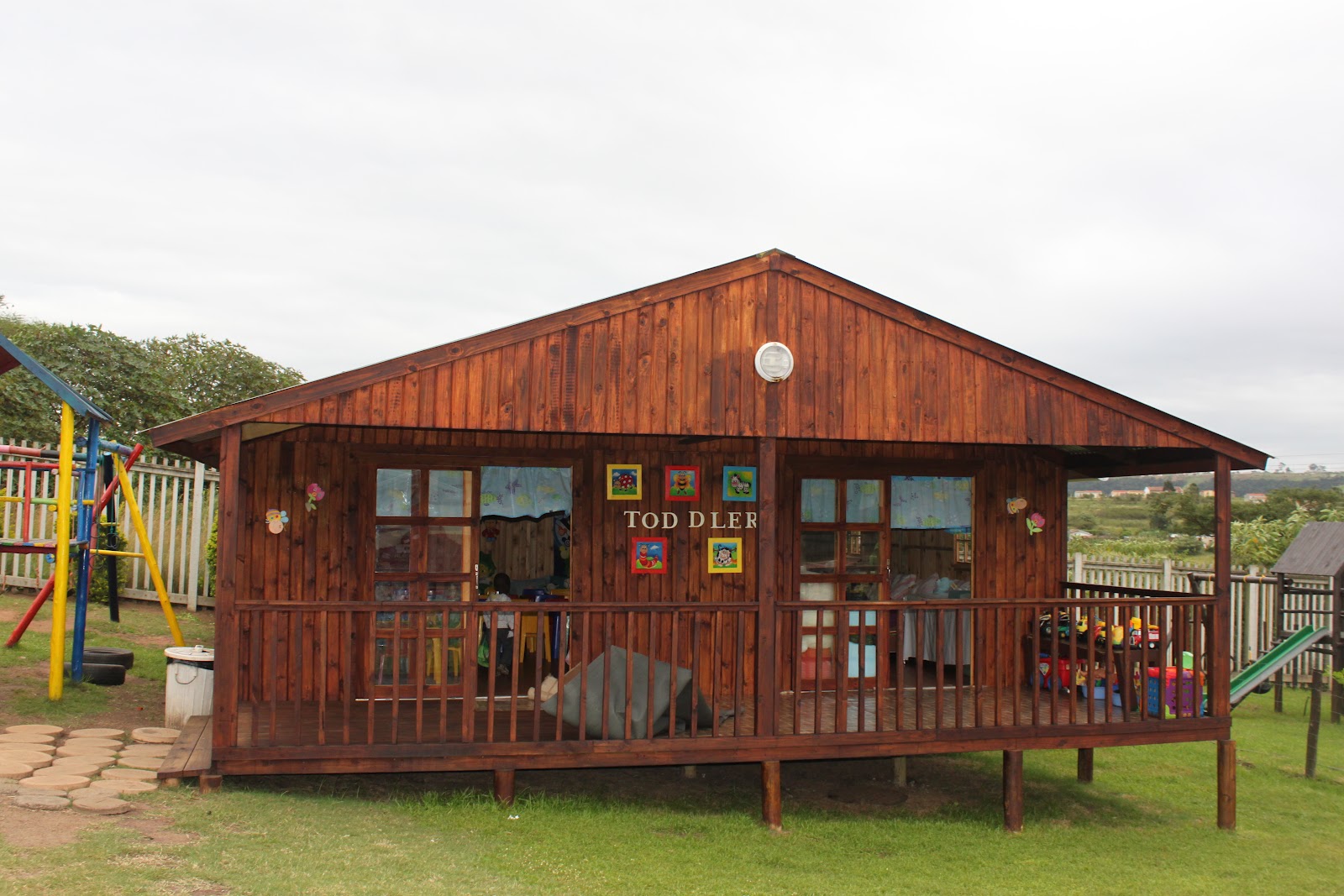
Toddler 2 room at 1000 Hills Community Helpers

Lindo the little ham of the group

Twins Anele and Kwanele

Okuhle on the tire screen

Kids eating breakfast, it was cold that day so they left their jackets on

Akhona aka Shrek Baby climbing

Anele on the slide
More pictures to come :)
Monday, February 20, 2012
Janine as a Teacher
Mondays, Wednesdays, and Fridays, Matt and I travel to a part of the Valley called Molweni, a rural township, to a Zulu school called St. Leo Primary School. The school has about 800 learners (South African word for students) from grade R to grade 7 who speak Zulu as their native language. We are teaching oral English to grades 3 to 7 and I personally teach grade 6 on Mondays, grade 4 on Wednesdays, and the lovely grade 7 on Fridays. Kevin and Matt teach grade 5 on Tuesdays and the adorable grade 3 on Thursdays, which includes quite the stories when they come home. The school itself is separated into 5-6 different buildings that each house two or three classrooms, a small library where we teach, and an administrative building where the principal and assistant principal have a small office.
Every morning there is an assembly where all the learners line up in rows according to grade and gender in front of one of the buildings. The assistant principal, Themba, or one of the other teachers leads the group in some songs and morning prayer followed by announcements. Matt and I always try to get there in time to see this assembly because it is a great way to start our day of teaching and be present for the learners to show that we care and are committed. After the assembly, we fight through the sea of students to get to the library/our classroom. The library building is shared between our classroom and two grade R classrooms, one on either side. The class that we share a door with has a really good teacher and the learners are always well behaved and doing something with the teacher, Thule. The other grade R teacher on the other side is very lazy, extremely obese, and doesn't do anything with her students. Those learners are always screaming, running around the classroom, and not doing any work. Most of the time the teacher doesn't even show up to school/leaves early. There have been multiple times that either Matt or I have had to go yell at the learners for being too loud when we are trying to teach our class. There is a teachers union at St. Leo that causes teachers like this lazy grade R one to still be able to stay at the school and get paid because no one wants to rat her out for doing such a poor job. Its quite the messed up system that neither Matt or I understand but someday we might have to say something if the ridiculousness continues. Unfortunately, this is not the only crazy thing about St. Leo. Have you ever wondered why things are the way they are? Well at St. Leo's there is no logical answer for anything. Last week one of the grade 2 teachers, who we never met, passed away from cancer which is very sad but the whole school was messed up because of it. Each day the kids have a 30 minute break from 10-1030am and last Monday the teachers had a meeting during that time to plan the memorial for the teacher but instead of it taking 30 minutes, it took 2 hours and all the kids were running around the school grounds with no supervision. Of course we didn't know what was going on until we tried to round up our next class and couldn't find any teachers let alone the learners we needed. Needless to say, the rest of the week was a disaster with the three hour long memorial service during the school hours on Wednesday and just random "early releases" for the other days. Since the teachers have an union, they are allowed to do what they want but last week they closed school early way too many days when they could of had the services or meetings after school hours so the kids could actually learn that day. Sad thing is on a normal week, the learners run wild for a good portion of the day or if they are in their classrooms, who knows what they are actually doing/if they are learning anything. The school has no set schedule/times and the days that each grade has our English class, the rest of the day is considered to be a "free" day for the learners and students. Now I will say there are some good teachers in the school that try and teach the kids and are dedicated but most use our English days as a time for the kids to run around. For example, on Wednesdays when we have grade 4, there are two different classes (4M and 4F) that are split into 4 classes each. So we usually have 4M group A, B, C, D and then 4F group A, B, C, D which works out well for us because its orgranized but when we have 4M group A, the rest of the kids are running around/maybe in their classrooms just talking and not doing any work. It is very hard to find the kids for the next class/have them come in at the right time but Matt and I are going to try to give each teacher a schedule of names and times we want the learners to come to English class which hopefully will work.
Ok enough with the complaining. Each grade has some kids that are great and sort of at the level they need to be at but most of them are way below. I always have to remind myself that English is their second language and remember how hard it was for me to learn French when I was in junior high. Another thing about the school that is frustrating is that the school doesn't start teaching both oral and written English until grade 3. So the grade 4 we have on Wednesday have only had one year of English before they came to us. Luckily the kids that are more "advanced" most likely have a parent or relative that speaks English at home which has helped them excel. The other kids who don't have someone like that are starting from scratch. For grade 4 we have taught/reviewed the alphabet, colors, food, shapes, and basic pictures. We have used the An African ABC book multiple times and tried to get them to pronounce the words correctly like A is for ant, A is for apple, B is for banana, C is for cat, etc. Most of the book is useful but some words are ridiculous like V is veranda and Q is for queue which I barely know what it is, how the heck are they supposed to know??
Grade 6 on Mondays is much better but we tried to give them a test this week and last week which all but about 20 bombed completely. This was partially our fault because we threw together a test that had contradicting directions that were confusing. In the first part they were supposed to underline the noun, circle the verb, and put a star over the adjective but then the next section they had to circle the adjectives that described the underlined noun. It was very confusing for most of the kids and we realized this within the first two classes but it was the only test we had so we tried to help them as much as we could. There are about 18 learners who got an "A" on the test which made us very happy/proud that we taught something well. We are going to make them the advanced group and teach them separately which will hopefully prepare them for grade 7 and eventually high school.
Friday we teach grade 7 who are going to high school next year and need a lot more preparation then we thought. There is a group of about 10 learners that are advanced but most of them are below average. One of the unique things we will be doing with this group is talking to the advanced/maybe "B" students about going to high school next year and making sure they fill out the appropriate paperwork. There are three different high schools in the area that these kids will go to: Hillcrest High School, Wybank High School, and "the blue school" which is the local township high school near St. Leo that wears blue uniforms. Each year, two grade 7 learners are given full scholarships to go to Hillcrest High School which is primarily white and very competitive. There are 3-4 learners that Matt and I think could go to Hillcrest and maybe 10 that could go to Wybank. Brother Craig who lives next to us helps out with the grade 7 advanced kids and helped with the scholarship process last year and will help this year as well. He has shadowed our grade 7 classes a couple times and has given us some helpful tips for ways to set up the classroom and teach different levels. Obviously Matt and I have been drawn to the advanced kids and there is one in particular that is easily the smartest learner in the school. His name is Ntuthuko and is actually the grandson of the Gogo (grandmother) we take Zulu lessons from on Fridays. His vocabulary, writing, and speaking are incrediable and he is always excited to participate and curious about learning. One Friday after class he stayed after and looked at a book about mummies and started asking Matt questions about the book that no other classmate would even comprehend let alone ask about in English. We would love for him to go to Hillcrest on one of the scholarships but unfortunately he has some behavioral issues because he got kicked out of a previous school. Even though we don't know many details, his aunt Themba (also the assistant principle) has talked to us about his bad behavior and definitely doesn't want to give the scholarship to him. Matt and I completely disagree and are going to try and fight for him but unfortunately the cultural and family issues might stop him from being able to get the scholarship and go to a great high school. I will keep you all posted more about him and all my other adventures teaching English!
South African Fact: People like to walk along the highway and cross traffic on the high way at any time of day. This is obviously very dangerous and extremely stupid but they still do it.
Every morning there is an assembly where all the learners line up in rows according to grade and gender in front of one of the buildings. The assistant principal, Themba, or one of the other teachers leads the group in some songs and morning prayer followed by announcements. Matt and I always try to get there in time to see this assembly because it is a great way to start our day of teaching and be present for the learners to show that we care and are committed. After the assembly, we fight through the sea of students to get to the library/our classroom. The library building is shared between our classroom and two grade R classrooms, one on either side. The class that we share a door with has a really good teacher and the learners are always well behaved and doing something with the teacher, Thule. The other grade R teacher on the other side is very lazy, extremely obese, and doesn't do anything with her students. Those learners are always screaming, running around the classroom, and not doing any work. Most of the time the teacher doesn't even show up to school/leaves early. There have been multiple times that either Matt or I have had to go yell at the learners for being too loud when we are trying to teach our class. There is a teachers union at St. Leo that causes teachers like this lazy grade R one to still be able to stay at the school and get paid because no one wants to rat her out for doing such a poor job. Its quite the messed up system that neither Matt or I understand but someday we might have to say something if the ridiculousness continues. Unfortunately, this is not the only crazy thing about St. Leo. Have you ever wondered why things are the way they are? Well at St. Leo's there is no logical answer for anything. Last week one of the grade 2 teachers, who we never met, passed away from cancer which is very sad but the whole school was messed up because of it. Each day the kids have a 30 minute break from 10-1030am and last Monday the teachers had a meeting during that time to plan the memorial for the teacher but instead of it taking 30 minutes, it took 2 hours and all the kids were running around the school grounds with no supervision. Of course we didn't know what was going on until we tried to round up our next class and couldn't find any teachers let alone the learners we needed. Needless to say, the rest of the week was a disaster with the three hour long memorial service during the school hours on Wednesday and just random "early releases" for the other days. Since the teachers have an union, they are allowed to do what they want but last week they closed school early way too many days when they could of had the services or meetings after school hours so the kids could actually learn that day. Sad thing is on a normal week, the learners run wild for a good portion of the day or if they are in their classrooms, who knows what they are actually doing/if they are learning anything. The school has no set schedule/times and the days that each grade has our English class, the rest of the day is considered to be a "free" day for the learners and students. Now I will say there are some good teachers in the school that try and teach the kids and are dedicated but most use our English days as a time for the kids to run around. For example, on Wednesdays when we have grade 4, there are two different classes (4M and 4F) that are split into 4 classes each. So we usually have 4M group A, B, C, D and then 4F group A, B, C, D which works out well for us because its orgranized but when we have 4M group A, the rest of the kids are running around/maybe in their classrooms just talking and not doing any work. It is very hard to find the kids for the next class/have them come in at the right time but Matt and I are going to try to give each teacher a schedule of names and times we want the learners to come to English class which hopefully will work.
Ok enough with the complaining. Each grade has some kids that are great and sort of at the level they need to be at but most of them are way below. I always have to remind myself that English is their second language and remember how hard it was for me to learn French when I was in junior high. Another thing about the school that is frustrating is that the school doesn't start teaching both oral and written English until grade 3. So the grade 4 we have on Wednesday have only had one year of English before they came to us. Luckily the kids that are more "advanced" most likely have a parent or relative that speaks English at home which has helped them excel. The other kids who don't have someone like that are starting from scratch. For grade 4 we have taught/reviewed the alphabet, colors, food, shapes, and basic pictures. We have used the An African ABC book multiple times and tried to get them to pronounce the words correctly like A is for ant, A is for apple, B is for banana, C is for cat, etc. Most of the book is useful but some words are ridiculous like V is veranda and Q is for queue which I barely know what it is, how the heck are they supposed to know??
Grade 6 on Mondays is much better but we tried to give them a test this week and last week which all but about 20 bombed completely. This was partially our fault because we threw together a test that had contradicting directions that were confusing. In the first part they were supposed to underline the noun, circle the verb, and put a star over the adjective but then the next section they had to circle the adjectives that described the underlined noun. It was very confusing for most of the kids and we realized this within the first two classes but it was the only test we had so we tried to help them as much as we could. There are about 18 learners who got an "A" on the test which made us very happy/proud that we taught something well. We are going to make them the advanced group and teach them separately which will hopefully prepare them for grade 7 and eventually high school.
Friday we teach grade 7 who are going to high school next year and need a lot more preparation then we thought. There is a group of about 10 learners that are advanced but most of them are below average. One of the unique things we will be doing with this group is talking to the advanced/maybe "B" students about going to high school next year and making sure they fill out the appropriate paperwork. There are three different high schools in the area that these kids will go to: Hillcrest High School, Wybank High School, and "the blue school" which is the local township high school near St. Leo that wears blue uniforms. Each year, two grade 7 learners are given full scholarships to go to Hillcrest High School which is primarily white and very competitive. There are 3-4 learners that Matt and I think could go to Hillcrest and maybe 10 that could go to Wybank. Brother Craig who lives next to us helps out with the grade 7 advanced kids and helped with the scholarship process last year and will help this year as well. He has shadowed our grade 7 classes a couple times and has given us some helpful tips for ways to set up the classroom and teach different levels. Obviously Matt and I have been drawn to the advanced kids and there is one in particular that is easily the smartest learner in the school. His name is Ntuthuko and is actually the grandson of the Gogo (grandmother) we take Zulu lessons from on Fridays. His vocabulary, writing, and speaking are incrediable and he is always excited to participate and curious about learning. One Friday after class he stayed after and looked at a book about mummies and started asking Matt questions about the book that no other classmate would even comprehend let alone ask about in English. We would love for him to go to Hillcrest on one of the scholarships but unfortunately he has some behavioral issues because he got kicked out of a previous school. Even though we don't know many details, his aunt Themba (also the assistant principle) has talked to us about his bad behavior and definitely doesn't want to give the scholarship to him. Matt and I completely disagree and are going to try and fight for him but unfortunately the cultural and family issues might stop him from being able to get the scholarship and go to a great high school. I will keep you all posted more about him and all my other adventures teaching English!
South African Fact: People like to walk along the highway and cross traffic on the high way at any time of day. This is obviously very dangerous and extremely stupid but they still do it.
Sunday, February 12, 2012
Boys will be boys
Every Monday, Tuesday, and Thursday from 3:30-5pm the four of us drive 20 minutes on the highway to St. Theresa's Home for Boys. There are about 75 boys living there in 8 different cottages. I think the younger kids have more boys in each cottage but the ones we work have between 6 and 10. Each of us is helping with a different cottage. I have cottage 3 which consists of eight boys that are 5th and 6th graders. Each of my boys have very different personalities but all of them are very vocal. Their names are Sihle, Seluleko (we call him Spider), Minenhle (we call him Chakie), Phlani, Llwellyn, Lyle, and Thobani. Sihle always has homework and on Thursday, I helped him with his spelling words which were pretty hard. He got most of them and the test was Friday so I’ll find out tomorrow how he did. Sihle came to St. Theresa’s in 2009 when his mom died (not HIV/AIDs) but was at St. Thomas Home before he came to St. Theresa’s. Spider is quite the character and calls me Auntie all the time. He always likes to talk and never has any homework because he goes to a different school than the other boys; although one day he did have to write “I will not be late to class” 200 times!! Thank God I never had to do that! Spider has a 20 year old sister who lives near Durban
We are mostly there for homework help but sometimes the boys don't have any homework so we just talk with them and watch them play soccer if we go down to the field. Some of the homework we have no clue about like naming the 9 provinces of South Africa
It’s sad that these boys are here but I think about the residential programs in the U.S.
South African Fact: Some of the kids at 1000 Hills have strings/rope around their waists. Julie explained to me that they are a Zulu tradition that "keeps away evil spirits." There is a whole ceremony that goes into it which is very expensive so not ever kid has one. You have to slaughter a goat, sheep, or cow and feed 100s of people as part of the ceremony. Zulu adults wear something on their left wrist that is the same concept. The head teacher in my room, Fikile, has them.
Thursday, February 2, 2012
The reason why I want to adopt an African child
For starters, I apologize for not posting an entry sooner but the internet at our house has been out for a week due to a storm we had last Tuesday. We knew this was going to happen coming into it but we never realized it was going to happen this quickly. So with that being said, sorry about not responding to emails/updating this until now.
Living in Kwazula-Natal has been amazing so far and I have been learning a lot. Driving was difficult at first but has gotten much better. My job placements are terrific and I am enjoying everything South Africa Durban
Now onto the actual blog. Every Tuesday and Thursday, I drive about 15-20 minutes on a very windy road into the Valley in a car with no AC or radio (living simply right there) to a place called 1000 Hills Community Center
As I pull onto the street where 1000 Hills Community Center
The amount of kids in the class is unbelievable but always makes for an entertaining day. A typical day usually starts around 7:30am when I get there but some of the kids are already there. Kids can come anytime between then and 8-8:30am. For the past few days we have been changing everyone into their “uniforms” which are little while 1000 Hills tshirts and blue of pink shorts based on gender. It helps to know who is a boy and who is girl so I can start trying to learn names (and how to pronounce them) but the process of changing every kid at the beginning of the day and then again when they go home is a little ridiculous. Around 8:30-9 depending on the day we sit the kids down for breakfast which is like a porridge/cereal and a piece of peanut butter and jelly sandwich. Some can feed themselves while others can’t. Most get it all over the place/themselves which is always funny but typical toddler behavior. After breakfast, the teachers clean up, wipe down the tables and chairs and stack them in the corner of the room, and sweep the floor. Next is usually play time which can consist of outside play or inside play with the puzzles. The first day I tried to take a couple kids a time to a table and have them do the puzzle which worked well for a while but there were too many kids and it was taking too long. The other day we put them on the floor which was even more of a disaster because each teacher can’t be with one puzzle and a small group of kids. I’m hoping to find a better system but feel uncomfortable stepping over any of the teachers. Lunch is the same process as breakfast but with curry and beans or fish and rice. This is even more messy and quite the process. Sometimes a couple of the kids will fall asleep during lunch or after they eat lunch but before their pudding which is pretty funny because they fall asleep in their chairs or with their head on the table. After lunch we do the whole clean up process again and then its time for nap time. Fikile lays down blankets and mats on the floor throughout the room and puts each child on their stomach in rows so they can sleep. The kids usually sleep from 12:30-1:45pm depending on if they already feel asleep during the morning or if they just don’t want to sleep. Then we help the kids change back into their clothes and I leave by 2pmish to get back to my house so I can go to St. Theresa’s the boys home with my roommates. It doesn’t seem like we do a lot/it’s a long day but with 46 kids in the class, everything is a process! It’s not hard work to interact with the kids because they are so adorable but I hope I will be able to help some of them interact more and learn more throughout the year. The site is great so far and if you saw these kids you would no doubt fall instantly in love with them. I know I sure did!
Feel free to check out the 1000 Hills website: www.1000hch.co.za
Feel free to check out the 1000 Hills website: www.1000hch.co.za
South african fact: The traffic laws aren't really traffic laws here. This morning I was driving Kellie to work and an 18 wheeler pulled a U turn across four lanes of traffic on a busy street. Quite entertaining that people let it happen!
Wednesday, January 18, 2012
Arrival and first impressions
We have safely arrived in Durban, South Africa yesterday (the 17th) around 11am SA time. Our flight and travel here was quite long and tiring but we have made it and can not be more excited for our adventure to begin. The 14 hour flight to Johannesburg wasn't as bad as I thought it was because we were able to break it up with naps, movie watching, food, and reading. In Johannesburg we had to go though passport check, get our bags, then go to domestic departures, recheck our bags, and go through security to eventually get on our plane to Durban. If this sounds complicated, it was. One of my roommate's Matt brought a keyboard to play which came through a different baggage claim which was an adventure in and of itself to find. Then getting through the airport with our luggage was another adventure. Needless to say we got to our gate and walked right through the cue to board the plane. The second flight was A LOT shorter (only about 50 mins) which was all we could handle at that point. Our arrival in Durban was exciting yet confusing again waiting for our luggage and eventually finding the priests who were picking us up. We definitely looked like the lost, out of place Americans arriving in a foreign country tired as anything. They waved us down only after seconds of confused looks and we were then in their cars heading to our house which is about 45 minutes away from the airport. The drive was wonderful and Brother Craig who Kevin and I drove with pointed out some areas and explained some of the crazy driving we encountered!!! The weather is summer and gorgeous! I changed into shorts and flip flops in the airport and we took a swim in the pool yesterday after settling in. The temp is probably around 75 degrees Fahrenheit but they say everything in Celsius so my conversion might not be exact.
So our house. Only one word to describe the complex we live on: INCREDIBLE. As soon as we arrived, I walked onto a porch area and my caught my breath as I looked out on the Valley of 1000 Hills. The view is amazing and unbelievable that this is our AV living place. On a clear day you can see the Indian Ocean but even the small bit of overcast yesterday gave a beautiful view of the Valley and the culture we will be living and working in. If you look to the right, you will get the same incredible view, same thing if you look to the left. I have tried some take some pictures already but they will never do it justice. The panoramic is amazing and I can't wait to look at it each day and spend the year learning about the people and everything that the Valley has to offer. Inside our house is cute and quaint with a living room and table when you first walk in followed by a small kitchen with all the essentials including a washer for your clothes not dishes. Two bedrooms and a bathroom are in the back of the house. On our property, there is the priests house aka "The Big House," another house which is being renovated for us to move into half way through our year, a lower cottage that larger AV groups used to split up, a pool, and a step area which they call a small amphitheater. Just walking around the grounds is incredible and I can't wait to explore more and find my spot to pray, journal, and reflect. Our cars are parked behind the priests house on a small basketball court and are intimating to look at but we will start our driving lessons hopefully today eekk!
Yesterday we spent time unpacking, settling in, swimming in the pool and trying to take in everything our AV living site has to offer but obviously that was impossible to do in one day. We also tried to stay up as long as possible so our bodies could adjust to the time difference. Dinner was a lovely, simple rice and beans because that was the only thing in our kitchen that was not expired. Needless to say the first thing on our list for when Pat gets here later today is grocery shopping. After dinner we put in American Pie where I watched maybe 15 minutes of it then proceeded to sleep on the couch for the rest of it. After the movie was over, my roommates kindly woke me up and we all went to bed. Kellie woke up at 6am this morning because she napped yesterday afternoon but the rest of us slept in and took our time getting up.
Pat should be arriving within the next hour or so and he will hopefully take us grocery shopping and to start our driving lessons. Today should be mostly getting a feel for the surrounding area and learning how to drive standard on the opposite side of the road, using the opposite hand to shirt and sitting on the right side of the car. This should be interesting... Tonight we have dinner at the Kloof community which is down the long hill road from our house. Every other Wednesday we will be eating dinner with the Augustinians at the Kloof parish and the other Wednesdays of the month we will cook for them. Tomorrow Pat will be showing us our service sites which will hopefully answer all the questions we have of timing, expectations, etc. We start work on Monday so we have lots to do before then.
That's the update for now but I will try to post again soon with hopefully some pictures. Thank you all for the love, support and prayers. Until my next post, xoxo.
So our house. Only one word to describe the complex we live on: INCREDIBLE. As soon as we arrived, I walked onto a porch area and my caught my breath as I looked out on the Valley of 1000 Hills. The view is amazing and unbelievable that this is our AV living place. On a clear day you can see the Indian Ocean but even the small bit of overcast yesterday gave a beautiful view of the Valley and the culture we will be living and working in. If you look to the right, you will get the same incredible view, same thing if you look to the left. I have tried some take some pictures already but they will never do it justice. The panoramic is amazing and I can't wait to look at it each day and spend the year learning about the people and everything that the Valley has to offer. Inside our house is cute and quaint with a living room and table when you first walk in followed by a small kitchen with all the essentials including a washer for your clothes not dishes. Two bedrooms and a bathroom are in the back of the house. On our property, there is the priests house aka "The Big House," another house which is being renovated for us to move into half way through our year, a lower cottage that larger AV groups used to split up, a pool, and a step area which they call a small amphitheater. Just walking around the grounds is incredible and I can't wait to explore more and find my spot to pray, journal, and reflect. Our cars are parked behind the priests house on a small basketball court and are intimating to look at but we will start our driving lessons hopefully today eekk!
Yesterday we spent time unpacking, settling in, swimming in the pool and trying to take in everything our AV living site has to offer but obviously that was impossible to do in one day. We also tried to stay up as long as possible so our bodies could adjust to the time difference. Dinner was a lovely, simple rice and beans because that was the only thing in our kitchen that was not expired. Needless to say the first thing on our list for when Pat gets here later today is grocery shopping. After dinner we put in American Pie where I watched maybe 15 minutes of it then proceeded to sleep on the couch for the rest of it. After the movie was over, my roommates kindly woke me up and we all went to bed. Kellie woke up at 6am this morning because she napped yesterday afternoon but the rest of us slept in and took our time getting up.
Pat should be arriving within the next hour or so and he will hopefully take us grocery shopping and to start our driving lessons. Today should be mostly getting a feel for the surrounding area and learning how to drive standard on the opposite side of the road, using the opposite hand to shirt and sitting on the right side of the car. This should be interesting... Tonight we have dinner at the Kloof community which is down the long hill road from our house. Every other Wednesday we will be eating dinner with the Augustinians at the Kloof parish and the other Wednesdays of the month we will cook for them. Tomorrow Pat will be showing us our service sites which will hopefully answer all the questions we have of timing, expectations, etc. We start work on Monday so we have lots to do before then.
That's the update for now but I will try to post again soon with hopefully some pictures. Thank you all for the love, support and prayers. Until my next post, xoxo.
South Africa Fact: There have been lots of monkeys in our area especially on my way to 1000 Hills. We have also seen cows and goats just walking on the side of the road. Not the typical African animals you might be thinking of but definitely different to the States.
Subscribe to:
Posts (Atom)